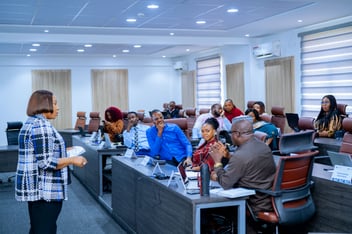
The short answer? More than just degrees.
With technological shifts, changing market needs, and the globalisation of work, today’s employers want professionals who are adaptable, tech-savvy, and globally competent. According to the World Economic Forum's Future of Jobs Report (2023), 39% of core job skills are expected to change by 2030.

If you want to remain competitive and relevant, now is the time to upskill. Based on insights from WEF, McKinsey, PwC Africa, and LinkedIn, here are six key skills African professionals must build to meet employer expectations in 2025 and beyond.

1. Digital Communication
Can you communicate clearly across digital platforms?
As remote and hybrid work becomes the norm, the ability to collaborate through emails, video calls, virtual tools, and shared documents is now a baseline skill.
The WEF ranks communication in tech-enabled environments as one of the top skills for the future workplace.
Employers aren’t just looking for people who can write a great report; they want professionals who can engage, lead, and connect effectively in virtual settings.
At Nile Online, digital communication is part of daily interaction, through assignments, peer discussions, and facilitator feedback, helping learners sharpen this crucial skill in real-time.
Our Professional Development Courses: Professional Digital Marketing: From Strategy to Execution; AI for Copywriting;
2. Critical Thinking
Can you solve real problems with smart thinking?
Employers are shifting from simply hiring for knowledge to hiring for judgment and decision-making. They need people who can think on their feet, question assumptions, and propose viable solutions.
Both McKinsey and WEF list critical thinking among the top 5 must-have skills in emerging economies.
In a world driven by rapid change, critical thinking is the difference between reacting and leading. Whether you work in finance, education, agriculture, healthcare, or tech, your ability to analyze and act on matters.

3. A Continuous Learning Mindset
Are you committed to growing, always?
In today’s world, one-time education isn’t enough. Employers value professionals who are self-driven learners, always improving and evolving with the times.
The World Economic Forum predicts that 50% of workers will need reskilling by 2025.
Microsoft’s African skills initiatives also emphasize lifelong learning as a key to future employability.
Whether through micro-courses, certifications, or degrees, lifelong learners are more adaptable and more in demand. That’s why Nile Online is built for structured flexibility, enabling busy professionals to learn anytime, anywhere, without stepping away from their careers.
Our Professional Development Courses: Economics for Strategic Decision-Making; Prompt Engineering; AI for Management Insights; Applied Data Analytics for Decision Making
- 4. Global & Cultural Competence
Can you thrive in multicultural and global teams?
African professionals are increasingly working with teams across borders, whether remotely or in multinational companies. Employers want team members who understand global markets, navigate cultural differences, and build inclusive relationships.
OECD research confirms that global competence is a core requirement for career growth in Africa’s international job market.
Nile Online mirrors this through virtual peer collaboration, with students across Africa working together on case studies and discussions, simulating the global workforce environment.

- 5. Data Fluency
Can you understand and use data to make better decisions?
Data is no longer just a tech thing. It’s a business skill, and African employers are seeking candidates who can read, interpret, and apply data, whether in sales, HR, healthcare, or marketing.
LinkedIn’s 2024 Workplace Learning Report highlights data fluency as a key skill gap employers are trying to close.
IBM reports that over 59% of global companies are prioritizing data-driven hiring and decision-making.
You don’t need to be a data analyst, but you do need to be data-literate. Nile Online includes this across programs, helping learners use data in strategy, analysis, and business cases.
Our Professional Development Courses: Economics for Strategic Decision-Making; Prompt Engineering; AI for Management Insights; Applied Data Analytics for Decision Making
6. Leadership Agility
Can you lead through change?
The African business landscape is dynamic, shaped by economic shifts, political instability, and technological disruption. Employers are prioritizing professionals who can lead teams, projects, and change efforts with confidence and flexibility.
PwC Africa’s 2023 Talent Trends report highlights “agile leadership” as essential in navigating Africa’s fast-changing work environments.
It’s not just about having authority. It’s about having the agility to guide others through uncertainty. That’s why Nile Online integrates real-world leadership models into its executive programs, empowering professionals to lead from wherever they are.
Our Professional Development Courses: Economics for Strategic Decision-Making; Executive Leadership and Strategy; Leadership Development; Operations Management; Mastering Negotiation; Strategic Marketing for Business Growth; Online MBA; Executive MBA

Final Thoughts: It's Time to Skill Up
If you’re looking to stay relevant, get promoted, or switch careers in the coming years, it’s not just about working harder; it’s about working smarter.
These six skills aren’t trends. They’re the new minimum.
And the earlier you start building them, the more opportunities you'll open up.
The programmes/courses are designed to help you master these in-demand skills, with the flexibility to learn on your terms.
Ready to build your future?